
platform
Stop Treating AI Agents Like Junior Employees
AI agents need distributed-systems discipline: durable state, idempotent retries, tracing, scoped permissions, and explicit human approval.
Read storyPublished articles
62
Live across automation, AI, and engineering tracks.
Active topics
17
Topics with at least one published article.
Publishing cadence
2
2 articles shipped over the last 30 days.
Last update
Fresh coverage streamed in recently.
Explore high-intent archives built for discoverability across AI models, market analysis, and macro-economic coverage.
Fresh playbooks, tooling notes, and activation guides curated by the automation desk.
Open archive 21 articlesFoundation-model launches, agent workflows, benchmark analysis, and implementation playbooks for applied AI teams.
Open archive 20 articlesFresh playbooks, tooling notes, and activation guides curated by the automation desk.
Open archive 14 articlesGlobal publishes source-verified country editions for the United States, China, Spain, France, Germany, Brazil, Japan, India, Indonesia and Saudi Arabia - each on its own URL, in its local language variant, and cross-linked to the other editions.
Open archive 11 articlesLatest tech innovations and trends
Open archive 10 articlesExplores solutions for large-scale organizations, focusing on tools and platforms that optimize operations, customer engagement, and business processes.
Open archive 10 articlesFresh playbooks, tooling notes, and activation guides curated by the automation desk.
Open archive 5 articlesBusiness updates, company milestones, and investor content.
Open archive AI agents need distributed-systems discipline: durable state, idempotent retries, tracing, scoped permissions, and explicit human approval.
Read story
A 2026 field note on why multi-agent AI fleets fail at the control plane, and how live probes, decoupled agents, fallback chains, and independent monitors keep capability alive.
Read story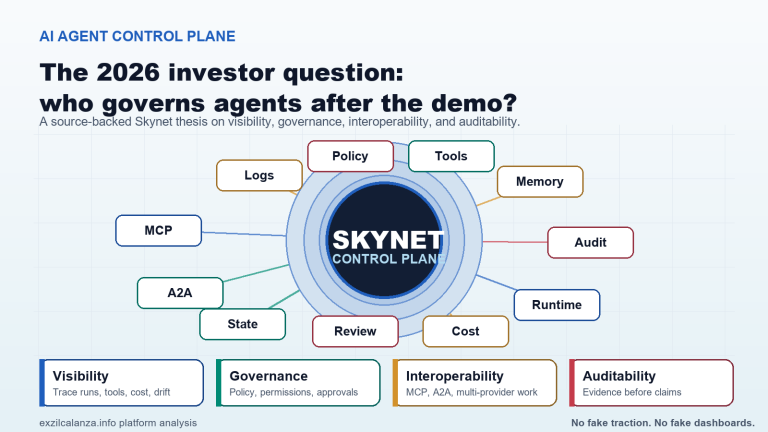
A source-backed Skynet analysis on why enterprise AI agents are shifting from demos to governed control planes for orchestration, auditability, and security.
Read story Chat with us