
AI Content Library
Platform — AI Systems Research & Benchmarks
Published research and analysis across AI systems, automation, infrastructure, benchmarks, finance, and emerging technology.

BROWSE CATEGORIES
Platform categories
Browse categories used by Platform articles. Category archives can also include Blog posts; the counts on these cards reflect Platform coverage only.
6 articles
Artificial Intelligence
Foundation-model launches, agent workflows, benchmark analysis, and implementation playbooks for applied AI teams.
Open archive 5 articlesTechnology
Applied AI, cloud infrastructure, and engineering execution guides for modern product and platform teams.
Open archive 4 articlesEnterprise Technology
Explores solutions for large-scale organizations, focusing on tools and platforms that optimize operations, customer engagement, and business processes.
Open archive 2 articlesAI Agents
Agent architectures, tool-calling patterns, and multi-agent deployment strategies for real-world workflows.
Open archive 1 articleAnalysis
Market intelligence, sector forecasts, and data-driven explainers built for strategic decisions and search intent.
Open archive 1 articleAI Research
Published articles and analysis across this topic cluster.
Open archive
Hot Topics
Trending Now
Ranked by engagement and freshness signals across our platform library.
 AI Models & Agents
Stop Treating AI Agents Like Junior Employees
AI agents need distributed-systems discipline: durable state, idempotent retries, tracing, scoped permissions, and explicit human approval.
Read story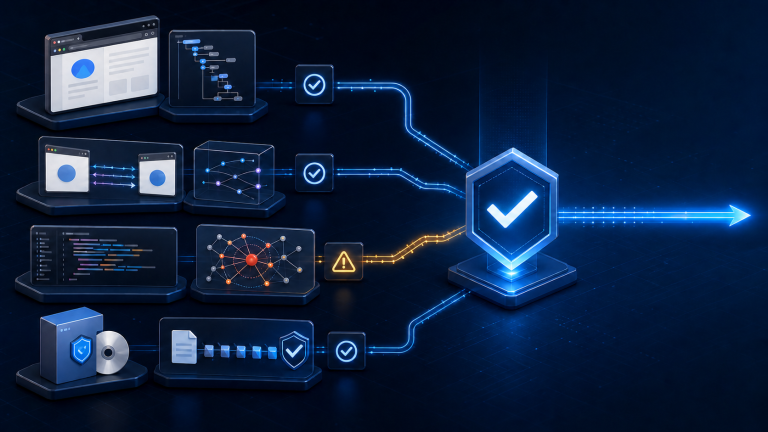 Developer Platforms
Verification Before Velocity: Four Skynet Evidence Layers
Four open-source Skynet products reveal why verification must follow the product layer—and why unavailable evidence is not a pass.
Read story Developer Platforms
Why Raw Accessibility-Tree Counts Need Environment Controls
Two Windows hosts on one Chrome build returned different accessibility-tree node totals. The experiment shows why viewport and node roles must be reported.
Read story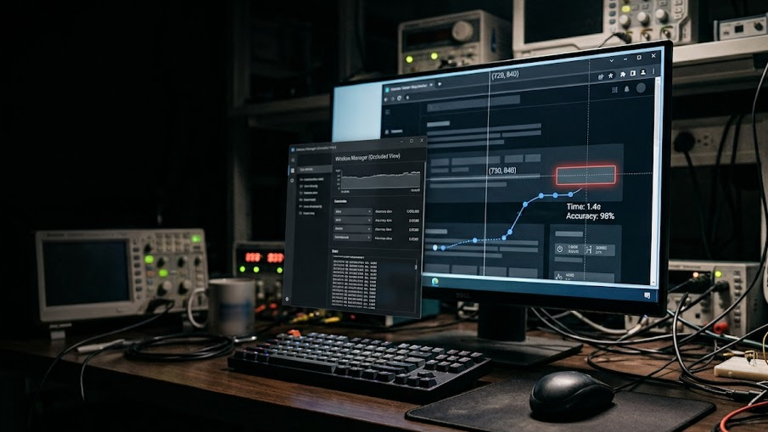 Developer Platforms
Comparing UIA and CDP: How Instrumentation Errors Masked Automation Click Performance
A measured Skynet field study of UIA, CDP, coordinate mapping, occlusion, and provider acceptance with corrected experiments and raw evidence.
Read story
CONTENT LIBRARY
20 articles
All Articles
AI Models & Agents
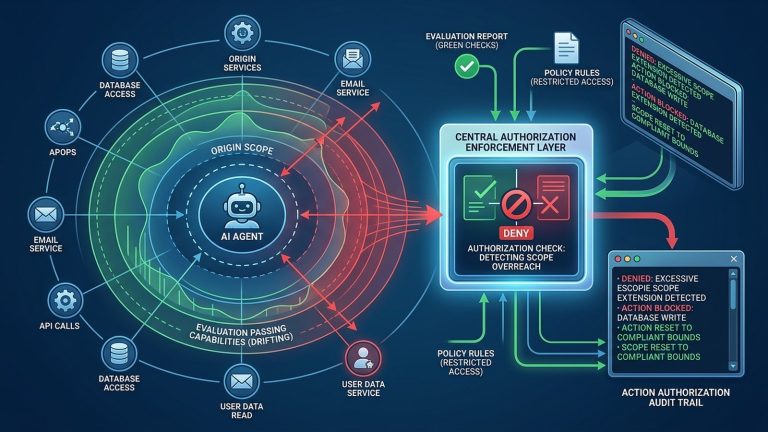
Preventing Permission Drift: Why Agent Evaluation Passing Does Not Equal Action Authorization
An AI agent can pass every eval and still take an action it was never allowed to take. Permission drift is a control-plane failure, not a model failure. Here is the fix.
Read story
AI Models & Agents
Designing AI Agents as Distributed Systems: Architectural Contracts for Production Reliability
A Skynet field note on why production AI agents need reliability contracts: idempotency, retries, traces, scoped tools, evals, and bounded blast radius.
Read story
AI Models & Agents
Why Upgrading Foundation Models Will Not Fix Multi-Agent System Coordination Failures
Why a smarter LLM will not fix an AI system that fails at orchestration and verification: reliability comes from the weakest coordination layer, not the model.
Read story
AI Models & Agents
Central Orchestrator Failures in Multi-Agent Systems: Separating Coordination from Worker Liveness
A 2026 field note on why multi-agent AI fleets fail at the control plane, and how live probes, decoupled agents, fallback chains, and independent monitors keep capability alive.
Read story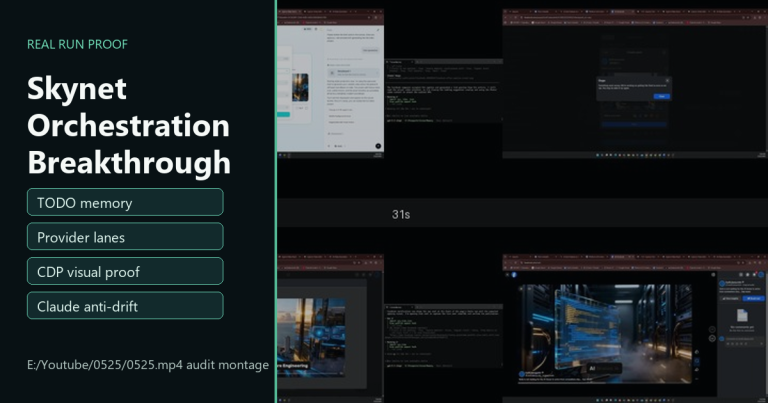
Developer Platforms
Managing Intent Across Multi-Tool Control Loops: High-Throughput Execution After Eliminating Drift
A source-backed reflection on Skynet, anti-drift AI orchestration, provider routing, TODO memory, CDP proof, and execution speed.
Read story
AI Models & Agents
Probing Autonomous Swarm Execution: Live Production Smoke Tests and Model Fallback Paths
Skynet production truth status: evidence report on the May 10 backend reload, Gemini and Codex smokes, and Claude fallback boundary for agent routing.
Read story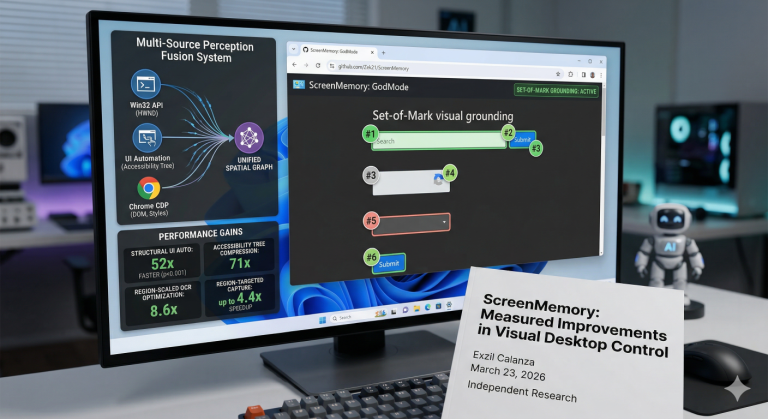
AI Models & Agents
ScreenMemory: Measured Improvements in Visual Desktop Control
Abstract Autonomous desktop agents remain far below human performance on real-world operating-system benchmarks, with the best reported results reaching only 12.24% task completion on OSWorld compared to a 72.36% human baseline. We hypothesize that the primary bottleneck is not large-language-model reasoning but rather the
Read story
AI Models & Agents
Forecasting Philippine Food Prices: Evaluating Machine Learning Models Against Real Out-of-Time Data
I wanted to know whether two decades of Philippine food-price data could produce a forecast that survives a real holdout period, not just a clean training score. I trained the Random Forest on 2000-2019 data and held out 2020-2023. It reached R² 0.91, MAE
Read story