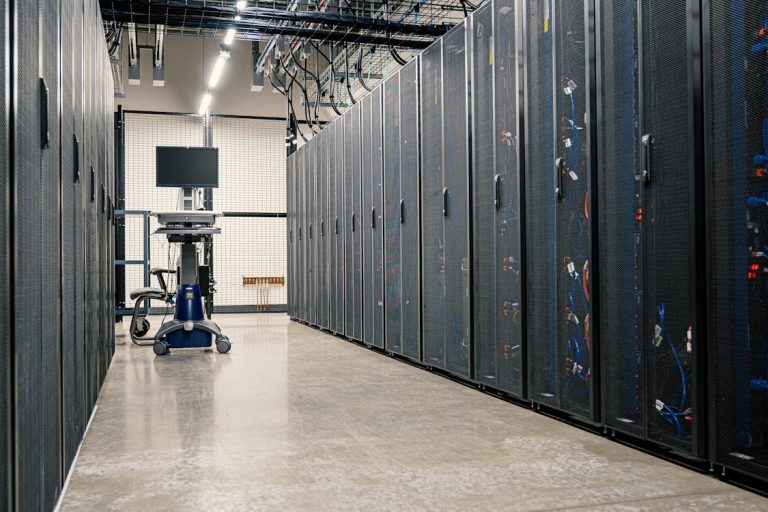
The End of One-Model Architecture
Routing every enterprise request to the largest available model is becoming economically irrational. The next inference stack looks more like a network control plane than a.
Read storyPublished articles

272
Live across automation, AI, and engineering tracks.
Active topics
43
Topics with at least one published article.
Publishing cadence
47
47 articles shipped over the last 30 days.
Last update
Fresh coverage streamed in recently.
Explore high-intent archives built for discoverability across AI models, market analysis, and macro-economic coverage.
Latest tech innovations and trends
Open archive 88 articlesFoundation-model launches, agent workflows, benchmark analysis, and implementation playbooks for applied AI teams.
Open archive 80 articlesEarnings coverage, valuation analysis, and investment strategy across U.S. and global equity markets.
Open archive 68 articlesMarket intelligence, sector forecasts, and data-driven explainers built for strategic decisions and search intent.
Open archive 56 articlesInflation, rates, labor, and fiscal-policy coverage connecting macro indicators to portfolio positioning.
Open archive 50 articlesExplores solutions for large-scale organizations, focusing on tools and platforms that optimize operations, customer engagement, and business processes.
Open archive 32 articlesFresh playbooks, tooling notes, and activation guides curated by the automation desk.
Open archive 29 articlesKeeps readers informed with breaking news, market trends, and event coverage, providing a comprehensive view of the tech industry's pulse.
Open archive
Routing every enterprise request to the largest available model is becoming economically irrational. The next inference stack looks more like a network control plane than a.
Read story

Enterprise agents should not jump directly from reasoning to state change. The missing layer is governed autonomy: risk tiers, confidence gates, dry runs, and machine-readable.
Read story
Per-seat SaaS pricing made sense when humans were the unit of software consumption. Agentic AI breaks that assumption by concentrating work into fewer seats and more automated.
Read story
Agentic resource exhaustion turns reasoning mistakes into invoice events. The serious risk is not that an agent fails once, but that it keeps failing expensively.
Read story
The headline number says enterprise AI agents are about to be embedded everywhere. The operational data says most companies are still nowhere near production readiness.
Read story
Skynet production truth status: evidence report on the May 10 backend reload, Gemini and Codex smokes, and Claude fallback boundary for agent routing.
Read story
GPT-5.5 reframes OpenAI's frontier model around agentic work, 1M-token API context, Codex execution, fewer tokens, and GPT-5.4-level latency.
Read story
Enterprise agentic AI is moving from copilots to workflow execution, but CIO reporting shows skills shortages, governance gaps, and cyber risk are the real bottlenecks in 2026.
Read story
Iloilo City ranks 5th among Philippine startup hubs as AI coding tools reshape global tech outsourcing. Plus: the agentic era forecast for 2026-2030.
Read story
OpenClaw became the fastest-growing open-source project in history — and the most dangerous AI tool most people have ever installed. At GTC 2026, NVIDIA answered with NemoClaw and OpenShell: kernel-level sandboxing, deny-by-default networking, and a privacy router that keeps sensitive data local. This is
Read story
Microsoft 365 Copilot uses GPT-5 auto-routing and deeper reasoning modes. Why agent washing and verification gaps still complicate enterprise AI adoption.
Read story
Dynamic effort parameters and context compaction APIs give developers finer control over reasoning cost and long-running agent memory.
Read story