IMF Shadow of War 2026: Oil Shock, Defense Spending, and the Fragile Macro Outlook
The April 2026 macro picture is no longer a standard growth-versus-rates story. The IMF now projects global growth of 3.1% this year, the EIA expects Brent crude to peak around $115 per barrel in the second quarter if Strait of Hormuz disruptions persist, and the Philippine peso officially closed at PHP 59.970 per dollar on April 16. These are not isolated headlines. They are the visible outputs of a single system under pressure from war, energy insecurity, and deficit-financed militarization [1][2][3][5].
Four Numbers Defining the April 2026 Shock
Downshift under a limited-conflict assumption [1]
About 20% of global petroleum liquids consumption [2]
Mostly debt financed, with inflation spillovers [4]
Imported energy stress visible in FX [5][6]
The IMF Has Moved the Baseline From Resilience to Stress Management
The IMF’s April 2026 World Economic Outlook frames the global economy as operating in the “shadow of war,” and that wording matters because it changes the policy baseline. This is no longer a forecast built on the idea that inflation is fading and that central banks can gradually normalize. The IMF’s core case assumes the Middle East conflict remains limited in duration and scope, yet even under that relatively restrained assumption global growth slows to 3.1% in 2026 and 3.2% in 2027, while headline inflation rises modestly before declining again in 2027 [1].
The IMF is explicit about where the stress concentrates. Commodity importers with preexisting vulnerabilities are under the most pressure, especially across emerging market and developing economies. That is a practical warning for investors and policymakers: the shock is not evenly distributed, and the countries most exposed to imported energy costs, thinner policy buffers, and weaker external balances are likely to feel it first in exchange rates, domestic inflation, and growth downgrades [1].
The second reason this matters is that the IMF’s downside risks are tightly linked. A longer or broader conflict can weaken growth directly through commodity prices and disrupted trade routes, but it can also work indirectly by tightening financial conditions, worsening fiscal stress, and damaging confidence in the same quarter. That creates an environment where the macro question is no longer “Will growth cool?” but “Which transmission channel breaks next?” [1].
How the April 2026 Shock Moves Through the System
| Channel | Current Signal | Why It Matters |
|---|---|---|
| Global growth | IMF now projects 3.1% in 2026 | Even the limited-conflict case is weaker than the earlier baseline [1] |
| Oil supply | Hormuz handled 20.9 million b/d in 1H25 | Small disruptions at this chokepoint can move global inflation expectations [2] |
| Defense financing | Typical booms are mostly deficit financed | Higher debt and wider deficits weaken future policy room [4] |
| Emerging-market FX | Peso closed at PHP 59.970 on April 16 | Imported energy stress shows up fast in currencies and local inflation [5][6] |
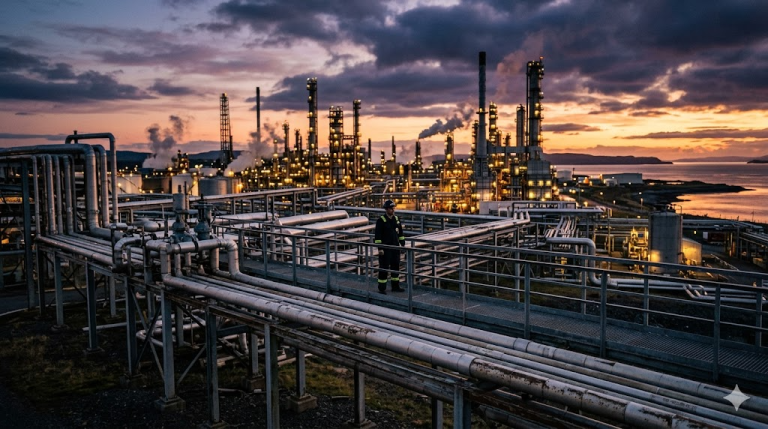
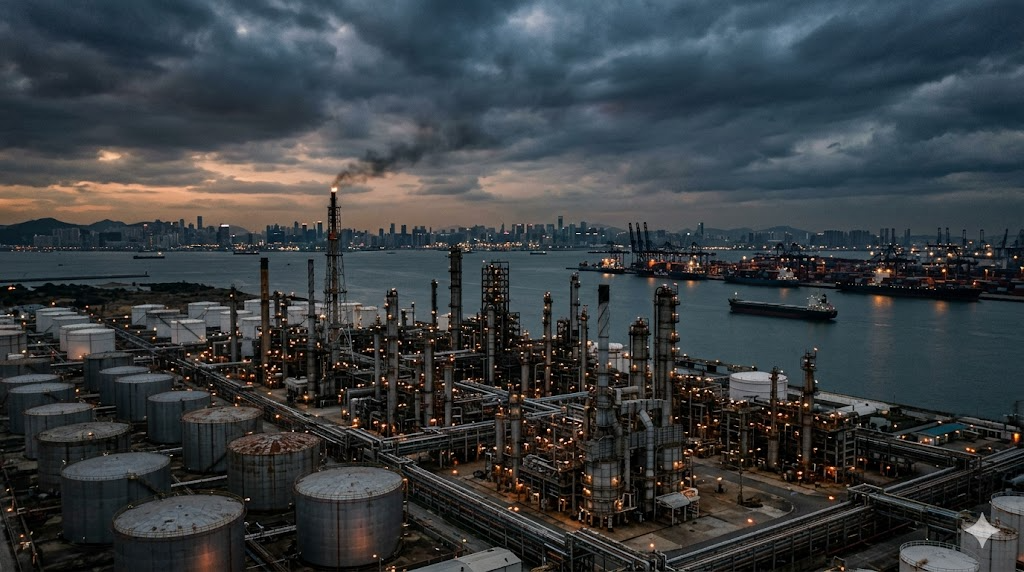
The Strait of Hormuz Is Still the Core Energy Risk Node
The EIA’s chokepoint analysis explains why the Strait of Hormuz dominates the inflation conversation. In the first half of 2025, total oil flows through the strait averaged 20.9 million barrels per day, equal to roughly 20% of global petroleum liquids consumption and one-quarter of total seaborne oil trade. LNG exposure is also material: 11.4 billion cubic feet per day moved through Hormuz in 1H25. That means a regional conflict does not need to destroy global supply outright to produce a large macro effect. It only needs to degrade confidence in the reliability of a route that carries an extraordinary share of energy trade [2].
The April 7 EIA press release makes the current shock more concrete. Its latest outlook assumes the conflict does not persist beyond April and that traffic through Hormuz gradually resumes. Even so, the agency estimates crude production shut-ins reached 7.5 million barrels per day in March and would rise to 9.1 million barrels per day in April before easing. Brent crude averaged $103 per barrel in March, and the EIA expects it to peak around $115 in the second quarter of 2026 before falling later in the year if disruptions abate [3].
That is important because it shows how much pain is embedded even in a relatively contained scenario. The baseline is not a return to pre-crisis pricing. It is a higher plateau with a persistent geopolitical premium. The EIA also expects diesel to remain particularly elevated, which is exactly the part of the price complex that leaks most quickly into shipping, food logistics, and construction costs [3].
What the EIA Is Actually Forecasting
| Indicator | Latest Official Reading | Macro Implication |
|---|---|---|
| Hormuz oil transit | 20.9 million b/d in 1H25 | Disruption risk remains globally systemic [2] |
| Hormuz LNG transit | 11.4 Bcf/d in 1H25 | Gas and power markets remain exposed, not just crude [2] |
| Estimated shut-ins | 7.5 million b/d in March, 9.1 million b/d in April | Physical outages remain large enough to reshape Q2 pricing [3] |
| Brent forecast | $103 average in March, $115 expected Q2 peak | Higher fuel and transport costs keep inflation sticky [3] |
Defense Spending Adds a Second Inflationary Engine
Oil is only half of the macro story. The IMF’s April 2026 work on defense spending shows that militarization is not a neutral fiscal backdrop. Across 164 countries since 1946, the Fund finds that large defense buildups have become more frequent, especially in emerging markets. In a typical boom, defense outlays rise by about 2.7 percentage points of GDP over roughly two-and-a-half years, with roughly two-thirds financed through deficits. Fiscal deficits worsen by about 2.6 percentage points of GDP, and public debt rises by about 7 percentage points within three years. In wartime booms, the debt hit is larger still, at roughly 14 percentage points of GDP [1][4].
That matters because defense spending is stimulative in the short run but not magically productive in the way the market often pretends. The IMF says defense multipliers are close to 1 on average, meaning the activity boost is real but limited. Growth can rise temporarily, yet the trade-off is higher inflation, weaker fiscal sustainability, and less room for social spending later. Once a country has both an external price shock and a defense-financed demand boost running at once, central banks inherit a far harder problem [1][4].
“Almost one for one into higher economic output.”
IMF on average defense-spending multipliers [4]
The best way to read this is not that defense booms are always recessionary. They are not. The IMF is more precise: they can support activity in the near term, but they also shift the composition of risk. Debt, interest costs, imported equipment demand, and crowding-out effects become more important. In a world already dealing with energy insecurity, that is a dangerous sequencing problem rather than a clean growth offset [4].
Typical Defense Boom vs. Wartime Boom
| Measure | Typical Defense Boom | Wartime Boom |
|---|---|---|
| Defense outlays | +2.7 percentage points of GDP | Higher and more disruptive [1][4] |
| Financing mix | Roughly two-thirds deficit financed | Even more fiscally stressful [1][4] |
| Fiscal deficit | Worsens by about 2.6 points of GDP | Severe widening [1][4] |
| Public debt | Rises about 7 points within three years | Jumps about 14 points [1][4] |
The Philippine Peso Shows How the Global Shock Reaches Households Fast
The Philippines is a practical case study for how imported energy shocks hit an open, commodity-importing economy. The Bangko Sentral ng Pilipinas reference bulletin dated April 17, 2026 shows a PDS closing rate of PHP 59.970 per U.S. dollar for April 16, with the BSP reference rate at PHP 59.950. That is the kind of level that immediately raises the domestic cost of fuel, food transport, and other imports priced in dollars [5].
BusinessWorld’s market coverage ties that pressure directly to oil. On March 17, the peso hit what was then a record low of PHP 59.87 as oil surged. By March 31, the currency weakened further to PHP 60.748 as the market priced a prolonged Middle East conflict and higher Brent crude. When geopolitical tensions appeared to ease on April 8, the peso rebounded sharply to PHP 59.43. The message is clear: the exchange rate has been trading not only on dollar strength, but on the perceived duration of the oil shock itself [6][7][8].
This is exactly what the IMF means when it says pressures will be especially pronounced in commodity-importing economies with vulnerabilities. The pressure does not stay in the FX market. It passes through into inflation expectations, rate decisions, consumer purchasing power, and equity valuations. Once the currency becomes the adjustment valve, households feel the macro story much faster than headline global growth numbers would suggest [1][5][7].
What Matters Next: Not a Single Crisis, but a Stacked One
The strategic mistake in April 2026 is to analyze each variable in isolation. If the market focuses only on oil, it misses the fiscal and debt effects of defense expansion. If it focuses only on defense, it misses the direct inflation pass-through from a chokepoint that still carries around one-fifth of global petroleum liquids consumption. If it focuses only on growth, it misses the fact that exchange rates and import costs are already transmitting the stress into vulnerable economies [1][2][3][4].
That is why the April IMF baseline is better read as a fragile holding pattern than a comfortable forecast. The limited-conflict case still includes slower growth, a temporary inflation reacceleration, and reduced room for policy error. A broader escalation would not create a brand-new macro regime; it would intensify the one already visible now. For portfolio strategy, that argues for respecting energy sensitivity, external-balance risk, and fiscal durability at the same time. For policy, it argues for treating resilience and credibility as scarce assets, not defaults [1][3][4].
Key Takeaways
- The IMF’s April 2026 base case is already weaker: 3.1% global growth assumes the conflict remains limited, not resolved [1].
- Hormuz remains the decisive energy chokepoint, with 20.9 million b/d of oil and 11.4 Bcf/d of LNG transiting in 1H25 [2].
- Defense buildups support short-term demand but widen deficits, raise debt, and complicate inflation control, especially when mostly deficit financed [1][4].
- The peso’s move to PHP 59.970 on April 16 shows how quickly imported energy stress can turn a geopolitical shock into a household one [5][6][7].
References
- [1] International Monetary Fund, “World Economic Outlook, April 2026: Global Economy in the Shadow of War,” Apr. 14, 2026. [Online]. Available: https://www.imf.org/en/publications/weo/issues/2026/04/14/world-economic-outlook-april-2026
- [2] U.S. Energy Information Administration, “World Oil Transit Chokepoints,” updated Mar. 2026. [Online]. Available: https://www.eia.gov/international/content/analysis/special_topics/World_Oil_Transit_Chokepoints/
- [3] U.S. Energy Information Administration, “Hormuz closure and related production outages are key drivers in EIA’s latest forecast,” Apr. 7, 2026. [Online]. Available: https://www.eia.gov/pressroom/releases/press586.php
- [4] International Monetary Fund, “Wars Impose Lasting Economic Costs, While More Defense Spending Means Hard Choices,” Apr. 8, 2026. [Online]. Available: https://www.imf.org/en/blogs/articles/2026/04/08/wars-impose-lasting-economic-costs-while-more-defense-spending-means-hard-choices
- [5] Bangko Sentral ng Pilipinas, “Financial Markets Reference Exchange Rate Bulletin, 17 April 2026,” Apr. 17, 2026. [Online]. Available: https://www.bsp.gov.ph/Lists/RERB/Attachments/2254/17Apr2026.pdf
- [6] BusinessWorld, “Peso dips to record as oil surges, fails to hit P60 as BSP intervenes,” Mar. 17, 2026. [Online]. Available: https://www.bworldonline.com/banking-finance/2026/03/17/736712/peso-dips-to-record-as-oil-surges-fails-to-hit-p60-as-bsp-intervenes/
- [7] BusinessWorld, “BSP: Inflation likely rose to 3.1-3.9%,” Apr. 1, 2026. [Online]. Available: https://www.bworldonline.com/top-stories/2026/04/01/740187/bsp-inflation-likely-rose-to-3-1-3-9/
- [8] BusinessWorld, “Shares jump to one-month high on US-Iran deal,” Apr. 8, 2026. [Online]. Available: https://www.bworldonline.com/editors-picks/2026/04/08/741606/shares-jump-to-one-month-high-on-us-iran-deal/