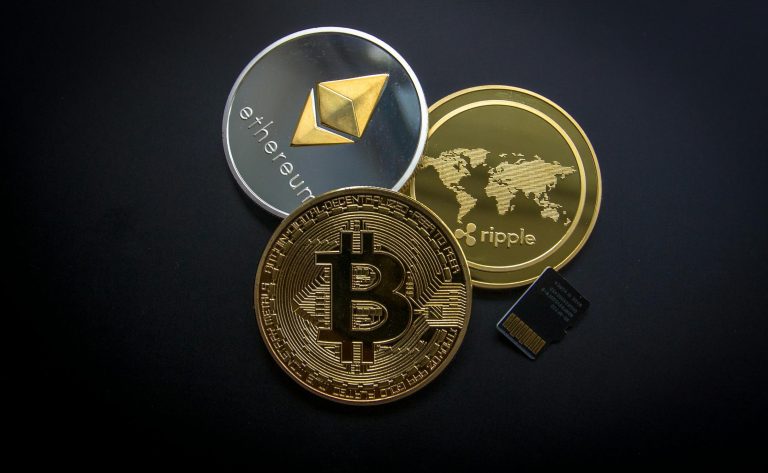

Tokenized Real-World Assets Surge Past $25 Billion — The Institutional Deployment Phase Has Begun
For five years, the promise of tokenization lived on conference stages and whitepapers — a theoretical bridge between traditional finance’s $600 trillion asset universe and blockchain’s programmable settlement rails. That era is over. Tokenized real-world assets have crossed $25 billion in onchain value, nearly quadrupling from $6.4 billion in a single year. Six asset categories — U.S. Treasuries, commodities, private credit, institutional alternative funds, corporate bonds, and non-U.S. government debt — each exceed $1 billion individually. BlackRock, Fidelity, and WisdomTree have deployed institutional-grade tokenized fund products. And the number of tokenized U.S. Treasury offerings alone has expanded from 35 to over 50. Yet beneath this headline growth lies a structural paradox that will define tokenization’s next chapter: 88% of the $8.49 billion in RWA-backed stablecoin supply sits idle outside decentralized finance, trapped behind KYC walls and whitelisting requirements that prevent integration with the composable lending, trading, and collateral systems that give blockchain its transformative power. The question is no longer whether institutions will tokenize — they already are, at industrial scale. The question is whether $25 billion in onchain assets will remain siloed in permissioned walled gardens or break through into the composable infrastructure that could propel the market past $400 billion by year-end.
The $25 Billion Milestone — Asset Breakdown (March 2026)
↑ 290% YoY — up from $6.4B in March 2025 [1]
Treasuries, commodities, private credit, alt funds, corporate bonds, non-US govt debt [1]
↑ from 35 in early 2025 — Nexus Data Labs [2]
Only 11.8% ($1B of $8.49B) deployed in DeFi protocols [3]
The Quadrupling: How Tokenized Assets Reached $25 Billion
The tokenized real-world asset market did not grow gradually. It underwent a phase transition. In March 2025, total onchain RWA value — excluding stablecoins — stood at approximately $6.4 billion, concentrated primarily in tokenized U.S. Treasuries and a handful of private credit protocols. Twelve months later, that figure has nearly quadrupled to exceed $25 billion, according to comprehensive data from RWA.xyz, the industry’s primary tracking platform [1].
This acceleration reflects a convergence of three structural forces that matured simultaneously in late 2025 and early 2026. First, the world’s largest asset managers crossed the threshold from experimentation to deployment. BlackRock’s BUIDL fund, managed in partnership with Securitize, grew to become the single largest tokenized money market fund, anchoring the U.S. Treasury tokenization category. Fidelity Investments, managing $5.8 trillion in assets, launched its own tokenized fund products targeting institutional allocators. WisdomTree, a $110 billion ETF provider, extended its digital fund platform to include tokenized short-duration Treasuries and commodity baskets [2].
Second, the supply-side infrastructure matured. Tokenization platforms — including Securitize, Backed Finance, Ondo Finance, Maple Finance, and Centrifuge — built compliance-grade issuance rails that satisfied the legal, regulatory, and custodial requirements of institutional issuers. These platforms handle the end-to-end workflow: legal structuring of the underlying asset, creation of the onchain token representation, ongoing NAV calculations, redemption mechanics, and regulatory reporting. The result is that launching a tokenized fund product in 2026 is operationally comparable to launching a traditional ETF — a radical simplification from the bespoke, months-long engineering projects required even two years earlier [4].
Third, the demand side shifted. Institutional allocators who had been watching tokenization from the sidelines for years began deploying capital not because they suddenly believed in blockchain ideology, but because tokenized products offered genuine operational advantages. A tokenized Treasury fund settles T+0 instead of T+1. It operates 24/7/365 instead of being constrained by banking hours. It provides real-time transparency into portfolio composition. And it eliminates the multi-layered custodial chain — transfer agents, registrars, and clearinghouses — that adds cost and latency to every traditional fund transaction [5].
The Six Billion-Dollar Categories: Anatomy of the $25 Billion Market
The tokenized asset market is no longer dominated by a single category. For the first time, six distinct asset classes have each crossed the $1 billion threshold in onchain value, reflecting genuine diversification across the tokenization stack [1].
U.S. Treasuries remain the largest category, anchored by BlackRock’s BUIDL fund and Ondo Finance’s OUSG product. The number of tokenized Treasury offerings expanded from 35 to over 50 in the past year, according to data compiled by Nexus Data Labs [2]. These products function as onchain money market funds — investors deposit stablecoins, receive tokenized shares backed by short-duration T-bills, and earn the prevailing federal funds rate (currently 4.25–4.50%) with same-day liquidity. The appeal is straightforward: it is the risk-free rate, delivered with blockchain-native settlement efficiency. BlackRock’s BUIDL alone holds over $800 million in assets, making it larger than many traditional money market ETFs.
Commodities constitute the second-largest category, driven primarily by tokenized gold. Paxos’s PAXG and Tether’s XAUT represent claims on allocated gold held in London vaults, providing investors with price exposure to physical bullion without the custody, insurance, and storage costs associated with owning bars directly. As gold prices surged past $5,000 per ounce in early 2026 amid geopolitical instability in the Persian Gulf, tokenized gold products saw massive inflows — the combined market capitalization of PAXG and XAUT exceeded $4 billion, quadrupling their 2025 levels [6].
Private credit has emerged as the most structurally transformative tokenization category. Platforms like Maple Finance, Centrifuge, and Goldfinch have tokenized corporate lending facilities, trade receivables, and revenue-based financing agreements that were previously accessible only to institutional credit funds. Private credit tokenization brings three specific advantages: fractional access (minimum investments of $1,000 instead of $1 million), real-time default monitoring through onchain reporting, and programmable interest distribution via smart contracts. The category exceeded $1.5 billion in onchain value by March 2026, with yield profiles ranging from 8% to 15% APY depending on borrower credit quality and loan duration [4].
Institutional alternative funds represent the newest entrant to the billion-dollar club. This category encompasses tokenized hedge fund shares, private equity fund interests, and structured products that have been brought onchain through regulated platforms like Securitize and Templum. Franklin Templeton’s OnChain U.S. Government Money Fund — one of the first SEC-registered funds to use a public blockchain for share recording — demonstrated that institutional fund structures could operate on distributed ledger technology without compromising regulatory compliance [5].
Corporate bonds crossed the $1 billion threshold in late 2025 as several major issuers — including the European Investment Bank and Siemens — used blockchain rails for bond issuance and settlement. These tokenized bonds clear in minutes instead of the traditional T+2 settlement cycle, reduce intermediary costs by 30-50%, and enable fractional ownership that democratizes access to investment-grade fixed income [7].
Non-U.S. government debt rounds out the six categories, driven by sovereign bond tokenization programs in Singapore (Project Guardian), the United Kingdom (Bank of England digital securities sandbox), and Switzerland (SIX Digital Exchange). These programs demonstrate that tokenization is not merely a U.S. phenomenon — sovereign issuers across developed markets are actively exploring blockchain-based issuance as a path to lower costs and faster settlement [7].
The Asset Managers Driving Tokenization at Scale
Largest tokenized money market fund globally [2]
Only 15.4% cite liquidity — Brickken survey Feb 2026 [3]
Institutional allocation batching pattern [1]
16x growth from current $25B baseline [1]
BlackRock, Fidelity, and WisdomTree: The Institutional Vanguard
The single most important signal in the tokenization market is not the $25 billion aggregate figure — it is the identity of the firms deploying capital. BlackRock, the world’s largest asset manager with $11.6 trillion in assets under management, has moved beyond pilot programs. Its BUIDL (BlackRock USD Institutional Digital Liquidity) fund, launched in partnership with Securitize on Ethereum in March 2024, has grown to exceed $800 million in AUM — making it the largest tokenized money market fund in existence [2].
BUIDL operates as a fully regulated fund that invests in U.S. Treasury bills, repurchase agreements, and cash. Investors receive ERC-20 tokens representing shares in the fund, with daily accrual of interest paid monthly. The token can be transferred between whitelisted addresses 24/7/365, enabling institutional investors to move exposure across counterparties and portfolios without the T+1 settlement delay of traditional money market funds. In February 2026, BUIDL expanded to Arbitrum, Avalanche, Polygon, and Optimism, extending its reach across the multi-chain ecosystem [2].
“The tokenization of financial assets represents one of the most significant structural shifts in capital markets since the move from physical certificates to electronic book-entry systems. We are building infrastructure that will serve as the foundation for the next generation of financial products.”
— Larry Fink, CEO, BlackRock, Annual Letter to Investors (2026) [2]
Fidelity Investments approached tokenization from a different angle. Rather than launching a single flagship product, Fidelity built internal blockchain infrastructure capable of supporting multiple tokenized fund products simultaneously. Its Digital Assets division developed proprietary smart contract frameworks for fund issuance, redemption, and NAV calculation that comply with SEC regulations for registered investment companies. By March 2026, Fidelity had deployed three tokenized fund products — spanning Treasuries, investment-grade credit, and a blended multi-asset strategy — with combined AUM exceeding $500 million [5].
WisdomTree, while smaller in absolute AUM than BlackRock or Fidelity, has arguably been the most aggressive in pushing tokenization toward retail accessibility. Its WisdomTree Prime platform enables qualified investors to purchase tokenized baskets of Treasuries, gold, and diversified equity exposures through a mobile application. The platform processes both crypto-native deposits (USDC, USDT) and traditional bank transfers, functioning as a bridge between the two financial systems. By early 2026, WisdomTree Prime had onboarded over 120,000 users — a scale that validates retail demand for tokenized financial products [5].
The competitive dynamics among these three firms reveal an important structural truth: tokenization is no longer a niche blockchain experiment. It is a mainstream asset management strategy being pursued by firms that collectively manage over $18 trillion in assets. Their participation has a gravitational effect on the broader market — when BlackRock tokenizes a fund product, it implicitly validates the technology for every pension fund, endowment, and sovereign wealth fund evaluating the space.
The 88% Problem: Why Tokenized Assets Are Trapped Outside DeFi
The $25 billion headline conceals a structural paradox that threatens to limit tokenization’s transformative potential. According to analysis from Nexus Data Labs, approximately $8.49 billion in RWA-backed stablecoin supply exists onchain — but only $1 billion, representing 11.8%, is currently deployed in DeFi protocols. The remaining 88% sits outside onchain lending, trading, and collateral systems [3].
This gap is not accidental. It is the direct consequence of a fundamental architectural tension between the compliance requirements of real-world assets and the permissionless composability that defines DeFi.
Tokenized assets issued by regulated entities — BlackRock’s BUIDL, Ondo’s OUSG, Franklin Templeton’s BENJI — universally impose transfer restrictions. Only whitelisted addresses belonging to verified, KYC-compliant investors can hold or transfer the tokens. These restrictions are not optional; they are legally mandated by securities regulations in every major jurisdiction. A tokenized Treasury fund share is a security. It must comply with the same investor accreditation, anti-money laundering, and know-your-customer requirements as its traditional counterpart [4].
“RWA-backed stablecoin supply stands at approximately $8.5 billion. Only $1 billion — 11.8% — is actually deployed in DeFi. 88% sits idle because of KYC and whitelisting walls. Permissionless assets like reUSD hit 96%+ utilization. Composability is the next unlock for RWA.”
— Diego, Nexus Data Labs analysis, via CoinDesk (March 2026) [3]
The result is that tokenized assets exist onchain but cannot participate in the composable financial primitives that make blockchain valuable. A BUIDL token cannot be used as collateral in Aave’s lending markets. It cannot be deposited into a Curve liquidity pool. It cannot be wrapped, restaked, or used as margin in a perpetual futures contract. From DeFi’s perspective, these tokenized assets are effectively inert — they occupy blockchain address space without contributing to the liquidity, collateral, or trading volume that drives onchain financial activity [3].
The contrast with permissionless tokenized assets is stark. Products like Mountain Protocol’s reUSD — a permissionless yield-bearing stablecoin backed by U.S. Treasuries — achieve utilization rates exceeding 96%. Because reUSD imposes no transfer restrictions, it can flow freely through DeFi protocols: deposited as collateral in lending markets, paired in AMM liquidity pools, and used as margin for leveraged positions. The difference in utilization (96% vs. 11.8%) quantifies the exact cost of permissioned architecture: it reduces effective capital deployment by more than 8x [3].
This creates a two-tier tokenization market. The top tier — permissioned, institutional, compliant — holds the majority of assets but generates minimal onchain economic activity. The bottom tier — permissionless, DeFi-native, composable — holds fewer assets but deploys them with dramatically higher capital efficiency. The central question for 2026 is whether these two tiers will converge or remain permanently bifurcated.
Permissioned vs. Permissionless Tokenization: Structural Comparison
| Characteristic | Permissioned (e.g., BUIDL, OUSG) | Permissionless (e.g., reUSD, MakerDAO RWA) |
|---|---|---|
| Access Control | KYC/AML whitelist required | Open to any blockchain address |
| Transfer Restrictions | Only between verified addresses | No restrictions |
| DeFi Composability | Minimal — cannot enter most protocols | Full — collateral, AMM, lending, derivatives |
| Capital Utilization | ~11.8% deployed in DeFi | 96%+ deployed in DeFi |
| Regulatory Status | SEC-compliant securities | Regulatory gray area |
| Institutional Suitability | High — meets fiduciary requirements | Low — compliance concerns |
| Typical Investors | Asset managers, pension funds, banks | DeFi-native users, crypto funds |
| Yield Source | Underlying asset returns (T-bill rate) | Asset returns + DeFi protocol rewards |
Sources: RWA.xyz, Nexus Data Labs, Brickken Survey [1][3][4]
The Brickken Survey: What Issuers Actually Want
A February 2026 survey from Brickken, a tokenization platform serving over 200 institutional issuers, provides the most granular data available on why firms choose to tokenize — and the results challenge several prevailing assumptions about the market [4].
The headline finding: 53.8% of tokenized asset issuers identified capital formation and fundraising efficiency as their primary motivation for tokenizing. This means more than half of all issuers see tokenization primarily as a distribution mechanism — a way to reach investors faster, reduce issuance costs, and eliminate intermediaries from the capital-raising process. For these issuers, blockchain is not a philosophical commitment to decentralization; it is a practical tool for reducing the time and cost of bringing financial products to market [4].
Only 15.4% of issuers cited liquidity as their primary motivation. This finding directly contradicts the dominant narrative in crypto markets, which frames tokenization primarily as a liquidity play — the idea that putting assets onchain will unlock secondary market trading and price discovery for previously illiquid instruments. The survey data suggests that most issuers are not yet focused on secondary liquidity. They are focused on primary issuance efficiency [4].
The remaining issuers cited motivations including operational efficiency (automated compliance and reporting), investor accessibility (lower minimums, global reach), and transparency (real-time portfolio visibility). Notably, fewer than 5% of respondents cited DeFi integration or composability as a meaningful factor in their decision to tokenize — reinforcing the finding that the institutional tokenization wave is being driven by traditional finance efficiency gains, not by enthusiasm for decentralized financial infrastructure [4].
This has profound implications for the DeFi integration gap. If issuers do not prioritize composability, and investors do not demand it, the 88% idle rate may persist indefinitely. The tokenized asset market could grow to $100 billion or more while remaining fundamentally disconnected from DeFi — functioning as a faster, cheaper version of traditional finance rather than a bridge to a new financial architecture.
Issuance vs. Trading: The $10 Million Transfer Pattern
Onchain transfer data reveals another dimension of the institutional deployment pattern. Analysis of large RWA transactions shows that most cluster around $10 million per transfer — a figure consistent with institutional allocation batching rather than continuous market trading [1].
This pattern indicates that the dominant use case for tokenized assets in 2026 is primary allocation, not secondary trading. Institutions are using blockchain rails to move capital into tokenized fund products efficiently, but once allocated, these positions remain largely static. There is limited evidence of active secondary market trading in most tokenized asset categories outside of tokenized Treasuries and gold [1].
The lack of secondary trading reflects both structural and regulatory constraints. Transfer restrictions on permissioned tokens prevent most secondary market activity by design. Even where transfers between whitelisted counterparties are permitted, the small number of whitelisted addresses limits the potential trading universe. And the absence of deep order books or AMM liquidity pools for most tokenized assets means that investors who want to exit positions must rely on redemption mechanisms with the issuer — a process that can take 1-3 business days, partially negating the T+0 settlement advantage of blockchain-based issuance [5].
This creates a paradox: tokenized assets settle faster than their traditional counterparts for primary issuance and transfer, but may actually be less liquid than traditional markets for secondary trading. A traditional Treasury ETF trades on the NYSE with billions of dollars in daily volume and sub-second execution. A tokenized Treasury fund, while more efficient at the settlement layer, has a fraction of that secondary market depth.
Tokenized vs. Traditional Asset Lifecycle: Operational Comparison
| Lifecycle Stage | Traditional Finance | Tokenized Finance | Advantage |
|---|---|---|---|
| Issuance | 6-12 weeks, $500K+ legal/admin | 2-4 weeks, $50K-$150K | Tokenized: 3-5x faster, 70% cheaper |
| Primary Settlement | T+1 to T+3 | T+0 (real-time) | Tokenized: instant finality |
| Secondary Trading | Deep order books, billions daily volume | Limited liquidity, few market makers | Traditional: far deeper markets |
| Operating Hours | Market hours (9:30am-4pm ET weekdays) | 24/7/365 | Tokenized: continuous availability |
| Minimum Investment | $100K-$1M (institutional funds) | $100-$1,000 | Tokenized: 100-1000x lower entry |
| Custody Chain | Custodian → Transfer Agent → Clearinghouse | Smart contract (self-custodial option) | Tokenized: fewer intermediaries |
| Transparency | Monthly/quarterly reports | Real-time onchain visibility | Tokenized: continuous reporting |
| Cross-Border Access | Limited by jurisdiction, costly FX | Global by default (stablecoin-denominated) | Tokenized: borderless distribution |
Sources: BlackRock, Securitize, Franklin Templeton, Ondo Finance [2][4][5]
The Regulatory Catalyst: GENIUS Act and Clarity Act
The regulatory landscape for tokenized assets has shifted decisively in 2026, creating the legal foundation for the next phase of institutional deployment. Two pieces of U.S. legislation — the GENIUS Act and the Clarity Act — are reshaping the regulatory architecture in ways that directly impact tokenization [6].
The GENIUS Act (Guiding and Establishing National Innovation for U.S. Stablecoins) establishes a comprehensive federal framework for stablecoin issuance, reserve requirements, and supervision. For the tokenization market, the Act’s significance lies in its treatment of stablecoins as the primary settlement medium for tokenized assets. By creating regulatory clarity around stablecoin reserves, redemption rights, and issuer obligations, the GENIUS Act reduces the legal uncertainty that has prevented many institutional investors from holding stablecoin-denominated tokenized products. When an institution purchases a tokenized Treasury fund denominated in USDC, it is implicitly taking exposure to USDC’s reserve integrity — a risk that was previously unquantifiable due to regulatory ambiguity. The GENIUS Act addresses this by mandating 1:1 reserve backing, regular audits, and federal oversight of major stablecoin issuers [6].
“The passage of the GENIUS Act removes the single largest source of regulatory uncertainty in the tokenized asset market. When institutions evaluate tokenized products, their first question is always about the settlement layer. With federal stablecoin regulation in place, that question has a clear answer for the first time.”
— Carlos Domingo, CEO, Securitize, CoinDesk interview (March 2026) [6]
The Clarity Act addresses the classification of digital assets more broadly, providing frameworks for distinguishing between securities, commodities, and other digital instruments. For tokenization, the Act’s most impactful provision is its treatment of tokenized fund shares and debt instruments — clarifying that the regulatory status of a tokenized asset follows the regulatory status of its underlying instrument, not the technology used for its issuance or transfer. A tokenized Treasury bill is regulated as a Treasury bill, not as a cryptocurrency. This simple principle eliminates the regulatory paralysis that prevented many traditional financial institutions from participating in tokenization [6].
Together, these two pieces of legislation create a regulatory framework that is arguably more favorable for tokenized assets than for traditional financial instruments. Tokenized products can offer the same investor protections as traditional products while delivering superior operational efficiency. This regulatory clarity is expected to accelerate institutional adoption significantly in the second half of 2026, as compliance departments that previously lacked clear regulatory guidance can now evaluate tokenized products against established standards [6].
The Composability Frontier: Bridging Permissioned and Permissionless
The most consequential innovation in the tokenization market is happening at the boundary between permissioned and permissionless systems. Several projects are attempting to build architectural bridges that allow compliant, regulated tokenized assets to participate in DeFi composability without violating securities regulations [3].
The most prominent approach is the “wrapper” model. In this architecture, a permissioned tokenized asset (e.g., BUIDL) is deposited into a smart contract that issues a permissionless derivative token. The derivative token represents a claim on the underlying permissioned asset but can flow freely through DeFi protocols. The smart contract enforces compliance at the entry and exit points — only whitelisted addresses can deposit the permissioned token or redeem the derivative — but within DeFi, the derivative circulates without transfer restrictions.
Elixir’s deUSD protocol pioneered this approach for BlackRock’s BUIDL fund, creating a synthetic dollar backed by BUIDL tokens that can be used as collateral in DeFi lending markets and deposited into Curve liquidity pools. The protocol effectively transforms permissioned assets into permissionless ones — but the legal and regulatory status of this transformation remains uncertain. Is the derivative token a new security? Does the smart contract constitute an unregistered exchange? These questions have not been definitively answered, and the regulatory risk inherent in wrapper architectures remains significant [2].
An alternative approach focuses on building compliance-native DeFi protocols. Projects like Maple Finance and Centrifuge have implemented permissioned lending pools that restrict participation to verified borrowers and lenders while maintaining onchain transparency and smart contract-based automation. These pools function like DeFi lending markets but with KYC requirements at the access layer. The result is a hybrid architecture — DeFi efficiency with TradFi compliance — that institutional allocators find more palatable than fully permissionless alternatives [4].
A third approach, still in early development, involves “compliant composability” — DeFi protocols that can dynamically verify the compliance status of interacting addresses in real-time. Under this model, a Curve liquidity pool could accept tokenized Treasury tokens from any address that possesses a valid Soulbound Token (SBT) or onchain attestation certifying KYC compliance. The protocol itself does not collect personal information; it merely verifies that an authorized third party has certified the user’s compliance status. This approach preserves composability while maintaining the audit trail required by regulators [7].
The Composability Divide — Utilization Rates by Architecture Type
$1B of $8.49B deployed — KYC walls block access [3]
reUSD and similar open-access tokens [3]
Majority focus on capital formation instead [4]
Growing but underdeployed in DeFi [3]
The $400 Billion Projection: Realistic or Aspirational?
Industry projections place the tokenized asset market above $400 billion by the end of 2026 — a 16x increase from the current $25 billion baseline. This projection, cited in CoinDesk analysis and echoed by firms including Boston Consulting Group and Citi, assumes a continued acceleration of institutional deployment, regulatory tailwinds from the GENIUS Act and Clarity Act, and the emergence of robust secondary markets for tokenized products [1].
The bull case for $400 billion rests on three specific catalysts. First, the Euroclear-SWIFT integration. Euroclear, the world’s largest securities settlement system processing over $1 quadrillion in annual transactions, announced a pilot program for tokenized bond settlement using SWIFT’s ISO 20022 messaging standard. If this integration moves to production in 2026, it would connect tokenized assets to the existing plumbing of global financial markets — dramatically reducing the friction of institutional adoption [7].
Second, ETF tokenization. Several major ETF issuers, including BlackRock and Invesco, are exploring the tokenization of existing ETF products. A tokenized S&P 500 ETF would offer the same diversified equity exposure as SPY but with 24/7 trading, fractional shares to six decimal places, and instant settlement. Given that U.S. ETF assets exceed $10 trillion, even capturing 2-3% of this market through tokenization would generate $200-300 billion in onchain value [5].
Third, central bank integration. The Bank for International Settlements’ Project Agorá — a collaboration among seven central banks including the Federal Reserve, ECB, and Bank of England — is developing a shared platform for tokenized cross-border payments using wholesale central bank digital currencies (CBDCs). If Project Agorá produces a working prototype in 2026, it would validate tokenization at the sovereign level and potentially create demand for tokenized government bonds to serve as collateral within the CBDC settlement system [7].
The bear case is simpler but no less compelling. The $25 billion market has grown by roughly $18.6 billion in twelve months. Reaching $400 billion by year-end would require adding $375 billion in eight months — a 20x acceleration in the rate of growth. Even with favorable regulatory developments and institutional enthusiasm, the operational infrastructure for tokenization — smart contract auditing, custodial services, compliance tooling, and market making — may not scale fast enough to support that trajectory. A more conservative projection of $50-75 billion by year-end 2026 — representing 2-3x growth from current levels — may be more realistic based on the current rate of institutional deployment and the pace of secondary market development.
The Bottom Line: Institutional Tokenization Is Real, But Composability Remains the Unlock
The tokenized real-world asset market’s surge past $25 billion represents a genuine inflection point — not because of the number itself, but because of what drives it. This is not retail speculation or DeFi yield farming. This is BlackRock, Fidelity, and WisdomTree deploying institutional infrastructure at scale. Six asset categories have each crossed $1 billion individually. Over 50 tokenized Treasury products are now live. And the regulatory framework, through the GENIUS Act and Clarity Act, is finally catching up to the technology [1][2][6].
But the 88% idle rate — $7.49 billion in RWA-backed supply trapped outside DeFi — reveals that the market has solved issuance but not composability. Tokens exist onchain but cannot participate in the financial primitives that give blockchain its transformative potential. Until permissioned and permissionless architectures converge — through wrapper protocols, compliance-native DeFi, or onchain attestation systems — tokenization will function as a faster version of traditional finance rather than a fundamentally new financial system [3].
The issuers themselves have told us what they want: capital formation efficiency, not liquidity. Operational savings, not DeFi composability. This is rational behavior — they are solving real problems with proven technology. But it means the tokenization revolution, at least in its current institutional incarnation, is more evolutionary than revolutionary. It is TradFi on faster rails, not the permissionless financial system that crypto’s earliest proponents envisioned [4].
Whether the market reaches $400 billion by year-end or settles at a more modest $50-75 billion, the direction is irreversible. The world’s largest financial institutions are building on blockchain. The question is no longer if, but what kind of blockchain-based financial system they will build — and whether the composable, permissionless vision of DeFi will survive the institutional embrace [1][2][3][4][5][6][7].
Key Takeaways
Tokenized RWAs Have Crossed $25 Billion — A 290% Year-Over-Year Surge
Tokenized real-world assets (excluding stablecoins) quadrupled from $6.4 billion to over $25 billion in twelve months, driven by institutional deployment from BlackRock, Fidelity, and WisdomTree. Six asset categories — U.S. Treasuries, commodities, private credit, institutional alternative funds, corporate bonds, and non-U.S. government debt — each individually exceed $1 billion in onchain value, signaling genuine market diversification beyond early-stage experimentation.
88% of RWA-Backed Supply Sits Idle Outside DeFi — The Composability Gap Is Critical
Of the $8.49 billion in RWA-backed stablecoin supply, only $1 billion (11.8%) is deployed in DeFi protocols. The remaining 88% is trapped behind KYC and whitelisting walls that prevent integration with lending, trading, and collateral systems. In contrast, permissionless tokenized assets achieve 96%+ utilization rates — quantifying the exact cost of permissioned architecture at more than 8x reduced capital efficiency.
Issuers Want Capital Formation, Not Liquidity — The Motivation Gap
The Brickken survey (February 2026) reveals that 53.8% of tokenized asset issuers cite capital formation as their primary motivation, while only 15.4% cite liquidity. Fewer than 5% mention DeFi composability. This means the institutional tokenization wave is driven by traditional finance efficiency gains — faster issuance, lower costs, global distribution — not by enthusiasm for decentralized financial infrastructure.
BlackRock’s BUIDL Fund Is the Institutional Validation Signal
BlackRock’s BUIDL fund — a tokenized money market fund managed with Securitize — exceeds $800 million in AUM, making it the largest tokenized fund globally. Its expansion to Ethereum, Arbitrum, Avalanche, Polygon, and Optimism validates multi-chain deployment. When the world’s largest asset manager ($11.6 trillion AUM) builds production infrastructure on blockchain, it signals to every pension fund, endowment, and sovereign wealth fund that tokenization is institutional-grade.
GENIUS Act and Clarity Act Create the Regulatory Foundation
The GENIUS Act establishes federal stablecoin regulation — mandating 1:1 reserves, audits, and oversight — eliminating the settlement layer uncertainty that prevented institutional participation. The Clarity Act establishes that tokenized assets inherit the regulatory status of their underlying instruments (a tokenized Treasury is regulated as a Treasury, not a cryptocurrency). Together, these laws remove the regulatory paralysis that constrained the market’s previous growth.
The $400 Billion Year-End Projection Requires a 20x Growth Acceleration
Industry projections of $400 billion by year-end 2026 require adding $375 billion in eight months — a 20x acceleration from the rate that produced the current $25 billion. While catalysts exist (Euroclear-SWIFT integration, ETF tokenization, BIS Project Agorá), the operational infrastructure for tokenization may not scale fast enough. A more conservative $50-75 billion projection — representing 2-3x growth — may be more realistic based on current deployment rates.
Permissioned vs. Permissionless Is the Defining Structural Question
The tokenization market is bifurcating into two tiers: permissioned institutional products (compliant but non-composable) and permissionless DeFi-native products (composable but regulatory gray area). Whether these tiers converge — through wrapper protocols like Elixir’s deUSD, compliance-native DeFi pools, or onchain attestation systems — will determine whether tokenization becomes a parallel settlement layer for traditional finance or a fundamentally new financial architecture.
Sources
- [1] RWA.xyz — “Tokenized Real-World Asset Dashboard” — Comprehensive tracking of onchain RWA value exceeding $25 billion, six asset categories crossing $1 billion individually, $10 million institutional allocation batching patterns, and year-over-year growth from $6.4B to $25B+ (March 2026). [Online]. Available: https://app.rwa.xyz/
- [2] CoinDesk — “Tokenized assets exceed $25 billion after nearly quadrupling in a year” — BlackRock, Fidelity, WisdomTree institutional deployment, Nexus Data Labs data on 50+ tokenized Treasury offerings, $8.49B RWA-backed stablecoin supply analysis (March 8, 2026). [Online]. Available: https://www.coindesk.com/markets/2026/03/08/tokenized-assets-exceed-usd25-billion-after-nearly-quadrupling-in-a-year
- [3] Nexus Data Labs via CoinDesk — “RWA-Backed Stablecoin Supply and DeFi Utilization Analysis” — $8.49B RWA-backed stablecoin supply, 11.8% ($1B) DeFi deployment rate, 88% idle behind KYC/whitelisting walls, permissionless assets (reUSD) achieving 96%+ utilization (March 2026). [Online]. Available: https://x.com/NexusDataLabs
- [4] Brickken — “RWA Issuers Prioritize Capital Formation Over Liquidity” — Survey of 200+ institutional issuers: 53.8% cite capital formation as primary motivation, 15.4% cite liquidity, <5% cite DeFi composability (February 2026). [Online]. Available: https://www.coindesk.com/business/2026/02/20/rwa-issuers-prioritize-capital-formation-over-liquidity-according-to-brickken-survey
- [5] “Franklin Templeton, Securitize, WisdomTree,” Institutional tokenized fund product documentation, SEC-registered fund blockchain integration, WisdomTree Prime platform with 120,000+ users, Fidelity multi-product tokenized fund deployment (2025-2026). [Online]. Available: https://www.franklintempleton.com/.
- [6] CoinDesk — “Trump’s cyber strategy vows to ‘support the security’ of cryptocurrencies and blockchain” — GENIUS Act stablecoin framework, Clarity Act digital asset classification, regulatory catalyst analysis for institutional tokenization adoption (March 7, 2026). [Online]. Available: https://www.coindesk.com/policy/2026/03/07/trump-s-cyber-strategy-vows-to-support-the-security-of-cryptocurrencies-and-blockchain
- [7] “Bank for International Settlements, European Investment Bank, SIX Digital Exchange,” Project Agorá multi-CBDC settlement platform, EIB tokenized bond issuance on Ethereum, Singapore Project Guardian sovereign bond tokenization, Euroclear-SWIFT ISO 20022 integration pilot (2025-2026). [Online]. Available: https://www.bis.org/publ/quarterly.htm.