
Gold Surges to $5,120, Silver Breaks $84, Bitcoin Tests $70K: The 2026 Safe-Haven Asset Rotation
Institutional capital is executing a massive, coordinated rotation out of risk assets into historical and modern safe havens. Gold tested $5,400 before settling at $5,120, silver broke above $84, and Bitcoin recovered from $63K to test $70K — while the U.S. dollar simultaneously strengthened in a rare signal of extreme systemic stress.
Haven Asset Performance During the Crisis
↑ Peak $5,400; systemic risk hedge [1]
↑ Key resistance broken [2]
↑ Recovering from $63K dip [2][3]
↑ Emerging market flight [1]
Gold: From Store of Value to Systemic Risk Barometer
Gold experienced an extraordinary, physical-demand-driven surge, ripping higher at the market open to test the unprecedented $5,400 per ounce level before stabilizing to trade at $5,120 per ounce [1]. The sheer magnitude of this move — gold has more than doubled from its $2,000–$2,500 range of 2024 — transcends normal safe-haven demand.
The pricing action in the precious metals market is highly instructive: institutional capital is not merely hedging against standard equity volatility or geopolitical risk. The scale of the gold bid indicates active positioning for a protracted period of fiat currency debasement, sovereign debt crises, and entrenched stagflation. Central banks globally — particularly in China, India, Turkey, and Poland — have been accumulating physical gold reserves at record rates throughout 2025, and the March 2026 spike has accelerated that sovereign hoarding impulse.
The technical behavior of gold during this crisis reveals institutional intent. The initial spike to $5,400 was driven by panic-buying and algorithmic momentum, but the stabilization at $5,120 — rather than a sharp reversal — indicates that real-money buyers (pension funds, sovereign wealth funds, family offices) are absorbing supply at these elevated levels. Unlike speculative rallies that reverse quickly, the $5,120 floor suggests structural, persistent demand that is repricing gold’s fair value permanently higher in the new macroeconomic regime.
Silver Breaks $84: Industrial and Monetary Demand Collision
Silver followed gold’s trajectory but with an additional, industrial dimension. Breaking key resistance levels to trade above $84 per ounce — a price not seen in the modern commodity era — silver is benefiting from the simultaneous convergence of monetary safe-haven demand and industrial supply squeeze [2].
Unlike gold, which is primarily a monetary metal, silver occupies a dual role: approximately 55% of annual silver demand comes from industrial applications (electronics, solar panels, medical devices, EVs), while the remainder serves investment and monetary purposes. The 2026 silver price reflects both demand vectors compressing supply simultaneously. On the industrial side, the energy crisis is disrupting silver mining supply chains (particularly from Mexico and Peru) while simultaneously increasing demand for silver-intensive solar panel manufacturing as nations rush to diversify energy sources away from Middle Eastern fossil fuels.
On the monetary side, silver’s gold-to-silver ratio has compressed dramatically. The historical ratio — typically ranging between 60:1 and 80:1 — has tightened as retail and institutional investors recognize silver as an undervalued relative hedge against the same stagflationary risks driving gold. At $5,120 gold and $84 silver, the ratio sits near 61:1 — still above the sub-50:1 levels that characterized the 2011 precious metals peak, suggesting further upside potential for silver relative to gold.
Bitcoin: High-Beta Technology Asset Meets Digital Safe Haven
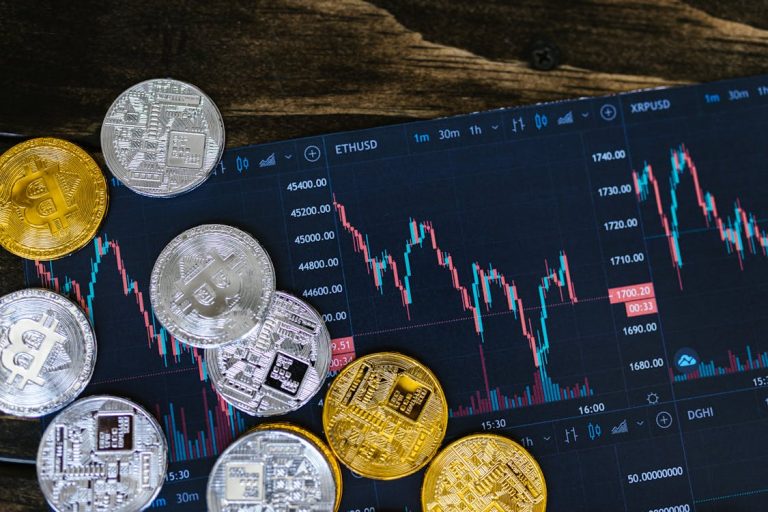
Within the digital asset ecosystem, Bitcoin exhibited the extreme, characteristic volatility that continues to define its dual identity. As news of the Middle East conflict broke over the weekend, Bitcoin dropped sharply below $63,000, correlating tightly with the broader risk-off panic in traditional equity markets [2]. The initial sell-off was driven by leveraged traders forced to de-risk under margin pressure, with the Crypto Fear and Greed Index falling to a reading of 10 — “Extreme Fear” — the lowest reading in over a year.
However, the dip was aggressively bought by institutional algorithms and spot Bitcoin ETF inflows, triggering a massive liquidation-driven rebound that pushed the asset back to test the $70,000 resistance level [3]. The recovery was partially fueled by President Trump’s State of the Union address, which highlighted record-low mortgage rates and painted an optimistic picture of domestic cooling inflation, temporarily boosting risk appetite across the Nasdaq and crypto markets [2].
Bitcoin’s price action during the March 2026 crisis demonstrates its complex, evolving maturation process. It no longer trades as a pure speculative asset, nor has it fully transitioned to a digital store of value. Instead, Bitcoin functions as a high-beta technology proxy in the initial phase of a risk event (selling off alongside equities) before reverting to its safe-haven thesis once the initial liquidation wave passes. The speed of the $63K-to-$70K recovery — measured in hours rather than days — reflects the structural buying power of institutional ETF accumulation and the algorithmic momentum strategies that now dominate Bitcoin market microstructure.
Safe-Haven Assets: Pre-Crisis vs March 2026
| Asset | Pre-Crisis Baseline | March 2026 Level | Signal |
|---|---|---|---|
| Gold (XAU) | ~$2,000–$2,500/oz | $5,120/oz (Peak $5,400) | Extreme systemic risk; stagflation |
| Silver (XAG) | ~$25–$30/oz | $84+/oz | Gold follow; industrial squeeze |
| Bitcoin (BTC) | ~$60,000 | ~$70,000 (dipped $63K) | ETF buying; liquidation recovery |
| U.S. Dollar (DXY) | Rangebound | Testing January highs | EM flight; dollar liquidity demand |
The DXY Paradox: Dollar Strength Alongside Gold
Perhaps the most significant and analytically revealing signal of the March 2026 crisis is the simultaneous strengthening of both the U.S. dollar and gold. The U.S. Dollar Index (DXY) strengthened sharply, testing its January 2026 highs as global liquidity fled emerging market currencies and sought the ultimate safety of U.S. Treasury bills [1].
Under normal market conditions, the dollar and gold maintain an inverse relationship: when the dollar strengthens, gold typically weakens because gold is priced in dollars and therefore becomes more expensive for foreign buyers. The violation of this inverse relationship — both surging simultaneously — is a rare macroeconomic signal that occurs only during periods of severe global systemic stress.
The mechanism operates through two distinct demand channels. The dollar strengthens because it remains the world’s primary reserve currency and the denomination of all global debt. During crises, entities worldwide need dollars to service dollar-denominated obligations — from sovereign debt payments to corporate bond coupons to commodity trade settlement. This structural demand for dollar liquidity drives the DXY higher regardless of U.S. domestic economic conditions.
Gold strengthens simultaneously because it functions as the ultimate sovereign counter-party risk hedge. While the dollar is needed for short-term liquidity, gold hedges against the longer-term risk that governments and central banks will debase their currencies through excessive money printing, monetize their debts through inflation, or face outright sovereign crises. The dual bid for dollars and gold signals that institutional capital is preparing for both the immediate liquidity crisis and the longer-term structural debasement scenario — a deeply bearish macro outlook.
Key Takeaways
- Gold at $5,120 (Peak $5,400): The surge from $2,000–$2,500 levels represents structural repricing — real-money institutional buyers absorbing supply signals permanent fair-value reassessment, not speculative froth [1].
- Silver Breaks $84: Dual industrial and monetary demand is compressing the gold-to-silver ratio to ~61:1, with mining supply disruptions and solar panel demand creating additional upside pressure [2].
- Bitcoin $63K→$70K Recovery: The rapid ETF-driven rebound from “Extreme Fear” (Fear & Greed Index = 10) demonstrates maturing institutional demand — Bitcoin sells off with equities but recovers independently on structural buying [2][3].
- Dollar + Gold Simultaneous Strength: The DXY testing January highs while gold surges is a rare signal of extreme systemic stress — markets are pricing both short-term dollar liquidity demand and long-term fiat debasement risk [1].
- Regime Capital Allocation Shift: The traditional 60/40 equity-bond portfolio is compromised by positive correlation between stocks and bonds during supply-driven inflation — safe-haven weighting must increase structurally.
- Central Bank Gold Hoarding Accelerates: Sovereign reserve accumulation by China, India, Turkey, and Poland throughout 2025 has intensified during the March crisis, creating a physical demand floor independent of speculative positioning.
References
- [1] “Gold Rips at the Open, Pulls Back to Test Swing Zone,” FOREX.com, Mar. 2026, accessed Mar. 8, 2026. [Online]. Available: https://www.forex.com/en-au/news-and-analysis/gold-rips-at-the-open-pulls-back-to-test-swing-zone/
- [2] “How Low Can Bitcoin Go? BTC Sees Best Rally in 10 Months,” Finance Magnates, Mar. 2026, accessed Mar. 8, 2026. [Online]. Available: https://www.financemagnates.com/trending/how-low-can-bitcoin-go-btc-sees-best-rally-in-10-month-but-30-forecast-still-on-the-table/
- [3] “Bitcoin tests $70K resistance after liquidation-driven rebound,” TradingView, Mar. 2026, accessed Mar. 8, 2026. [Online]. Available: https://www.tradingview.com/news/invezz:c4ef9f4e1094b:0-bitcoin-tests-70k-resistance-after-liquidation-driven-rebound/
- [4] “Market Quick Take — 6 March 2026,” Saxo Markets, Mar. 6, 2026, accessed Mar. 8, 2026. [Online]. Available: https://www.home.saxo/en-hk/content/articles/macro/market-quick-take—6-march-2026-06032026